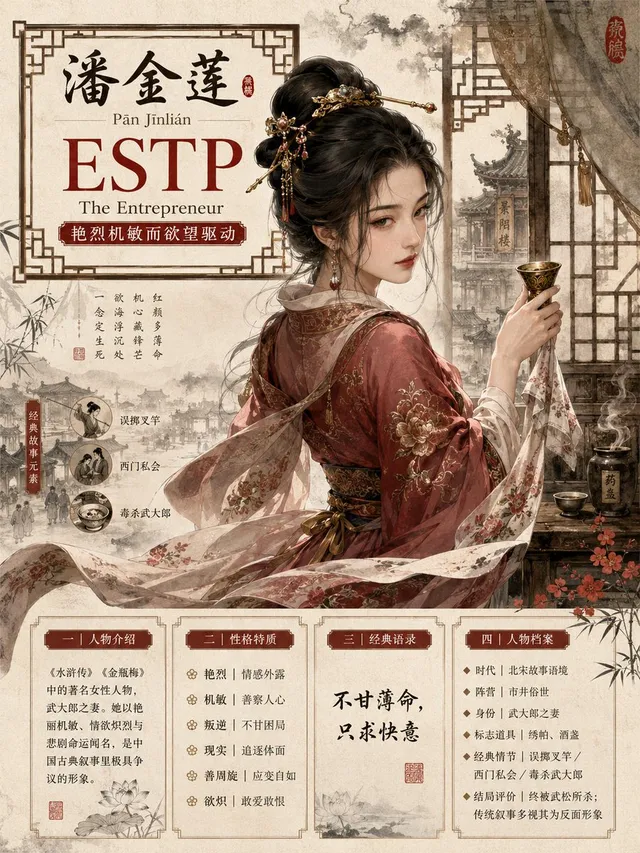
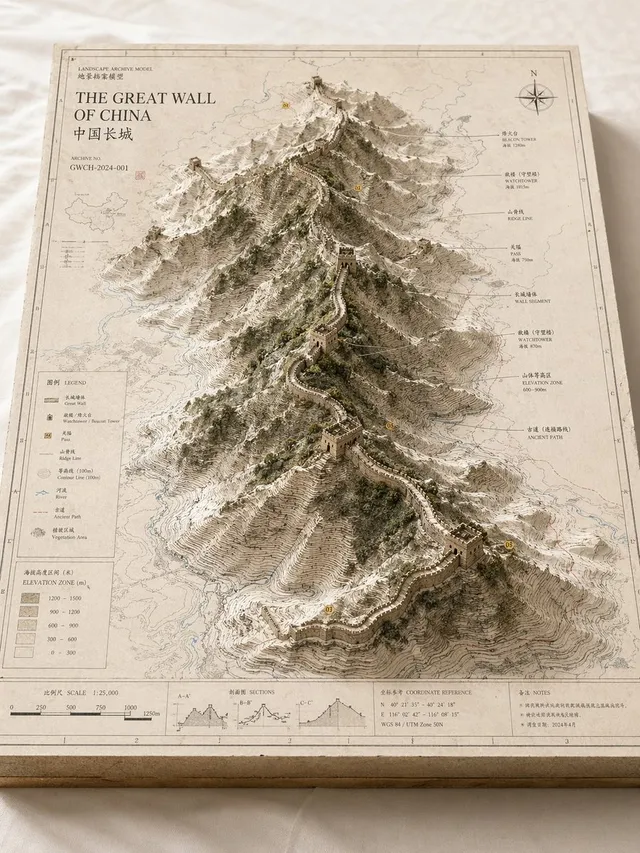
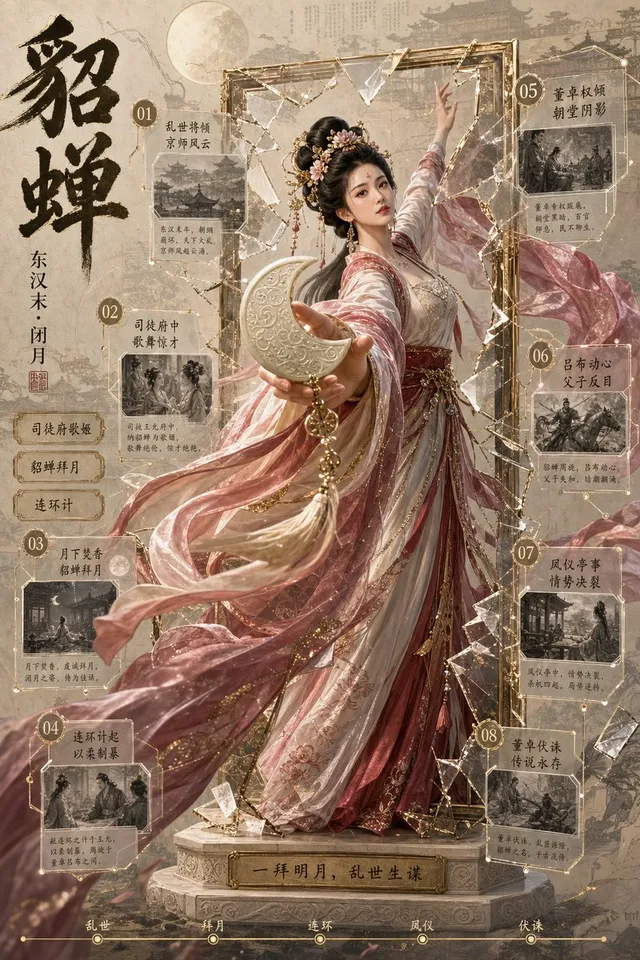
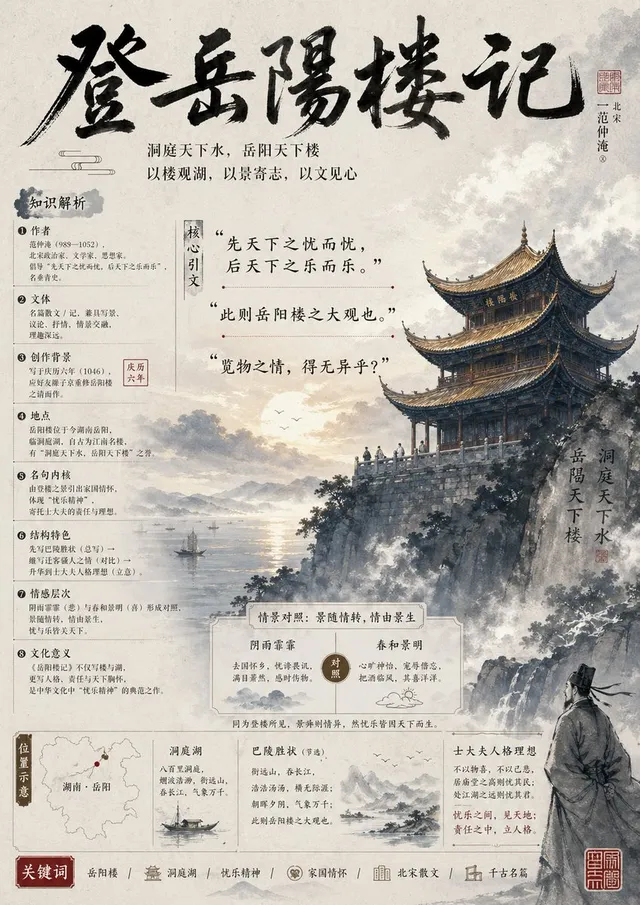
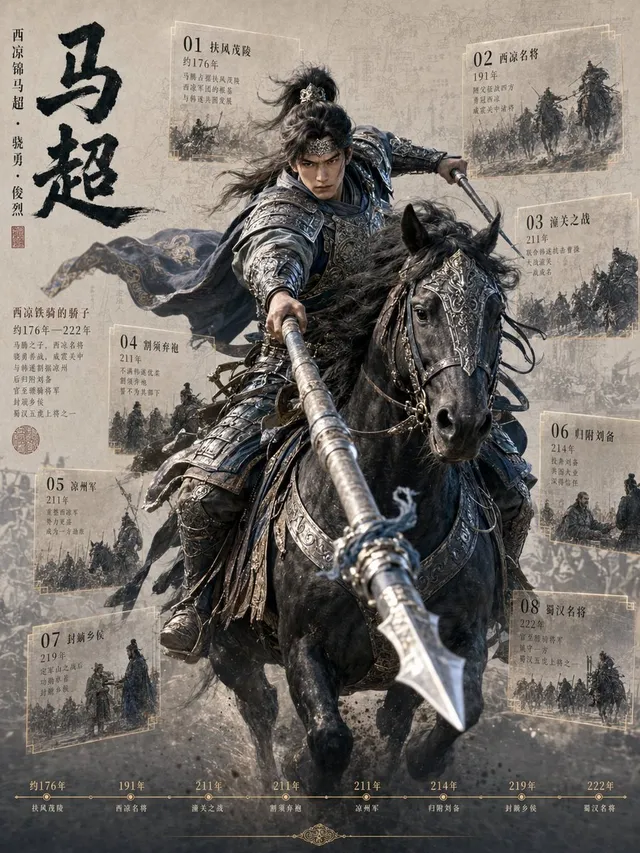
프롬프트/GPT Image 프롬프트/프롬프트 세부 정보이미지 프롬프트3D 중국 역사 인물 아카이브 포스터이벤트 카드와 하단 타임라인이 있는 고대 중국 국경 사령관 반초의 영화 같은 3D 인포그래픽 포스터를 만듭니다.이 프롬프트는 참조 이미지와 함께 사용되었습니다이 프롬프트 사용좋아요104조회30,001북마크74이 프롬프트를 저장하거나 친구와 공유하세요.프롬프트 공유프롬프트복사Goal: Create a cinematic vertical historical figure archive poster about {argument name="character name" default="班超"}, showing a heroic ancient Chinese frontier general breaking out of a documentary-style infographic layout. Canvas: Vertical 3:4 poster, 768 x 1024 feel, sepia-gold and smoky gray historical palette, dramatic backlight, dust, battlefield haze, high-detail 3D realism mixed with museum exhibition graphics. Main subject: One full-body ancient Chinese armored commander stands in the center foreground, low-angle heroic composition. He wears layered dark lamellar armor, engraved belt plates, leather boots, red-brown cloak blowing leftward, and a stern dignified expression. His left arm thrusts forward toward the viewer holding a tall wooden command tablet engraved with Chinese calligraphy; his right hand holds a vertical staff or ceremonial standard with a tassel and Chinese characters. Make the figure feel three-dimensional, as if stepping out of the flat poster frame. Background: Ancient Western Regions frontier setting with rocky desert ground, mountains in the distance, mounted soldiers and caravan silhouettes on the left, and a large fortified city gate on the right with banners, scaffolding, guards, and the gate plaque reading in Chinese. Add a large weathered war banner in the upper right. The atmosphere should suggest expedition, diplomacy, military command, and westward expansion. Left typography block: Place very large black brush-calligraphy title text {argument name="main title text" default="班超"} vertically on the upper left. Beneath it, add smaller vertical Chinese biographical text describing birthplace, role, and lifespan, including the years 32—102. Add a small red seal stamp below the biographical block. Floating archive cards: Add exactly 8 translucent glass-like historical event cards around the character, each with thin gold borders, tiny corner rivets, Chinese text, and monochrome documentary mini-illustrations. Count and place them as follows: 1) top center card, labeled 01 and 73, about joining the army after abandoning the brush; 2) left-middle card, labeled 02 and 73, about mission to the Western Regions; 3) top right card, labeled 03 and 91, about pacifying the northern Xiongnu; 4) right-middle card, labeled 04 and 95, about suppressing rebellion; 5) lower-left-middle card, labeled 05 and 96, about establishing the Protectorate of the Western Regions; 6) bottom-left card, labeled 06, about governing for forty years and uniting many states; 7) lower-right-middle card, labeled 07, about opening the Silk Road; 8) bottom-right card, labeled 08 and 102, about returning to Luoyang in old age. Each card should include a small faded illustration of cavalry, officials, soldiers, maps, or caravans. Bottom timeline: Add exactly 6 timeline milestones along the bottom edge with a thin gold horizontal line, small dots, and Chinese labels: 32 birth, 73 joining army and mission west, 91 northern Xiongnu, 95 suppressing rebellion, 96 setting up the Protectorate, 102 successful return to Luoyang. Keep the timeline legible but secondary. Visual style: Epic Chinese historical 3D poster, ultra-detailed armor textures, cinematic volumetric lighting, dust particles, depth of field, parchment-like overlays, museum archive infographic design, gold linework, realistic fabric motion, dramatic perspective. Constraints: Use exactly one central historical figure, exactly 8 floating event cards, and exactly 6 bottom timeline milestones. Keep all visible text in Chinese calligraphy or Chinese serif style, with no English labels in the poster. Avoid modern objects, neon colors, cartoons, watermarks, or extra characters dominating the central figure.프롬프트 보기